

Top 5 Heavy-Duty Ropes for Industrial and Construction Use: Best Durable Ropes Comparison and Reviews
April 21, 2026
In the industrial and construction sectors, the integrity of your equipment is the foundation of site safety. When handling heavy loads or securing high-value assets, generic retail cords aren’t enough. You need professional-grade, Canadian-made solutions engineered for extreme environments. At Braid & Lace, we specialize in custom-manufactured rope products designed to meet the rigorous demands of Canadian industries.
What Are the Best Heavy-Duty Ropes for Industrial and Construction Use?
The best heavy-duty ropes are defined by their material composition and weave. Unlike general-purpose ropes, construction ropes are engineered for high tensile strength and minimal stretch.
-
Materials for Durability: Synthetic fibers like High-Tenacity Polyester, Nylon, and Polypropylene are the standard. Polyester offers excellent UV resistance, while Nylon provides the “shock absorption” necessary for dynamic loads.
-
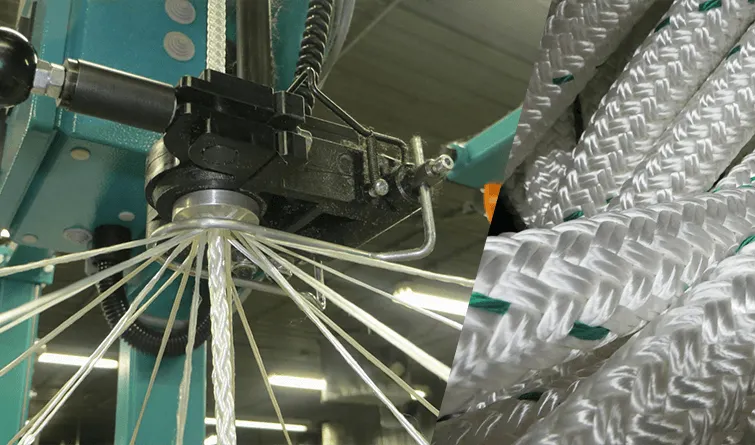
Construction vs. General-Purpose: Industrial ropes feature tighter braids (such as double-braid or 12-strand) to prevent snagging and reduce internal friction, which is critical when used with pulleys or winches.
How to Choose the Right Heavy-Duty Rope for Construction Projects?
Selecting the wrong rope can lead to equipment failure or site accidents. Consider these critical factors:
-
Load Capacities & Strength Ratings: Always check the Minimum Breaking Strength (MBS) and ensure your Safe Working Load (SWL) accounts for a significant safety factor (typically 5:1 or 10:1 for lifting).
-
Environmental Resistance: For outdoor projects, choose ropes with high resistance to abrasion, moisture, and harsh UV exposure to prevent premature fiber breakdown.
Top 5 Heavy-Duty Ropes for Industrial and Construction Use
Based on performance and durability, here are the top picks for professional applications:
-
Double-Braid Polyester: The gold standard for pulling and rigging. It offers a balance of high strength, low stretch, and superior abrasion resistance.
-
High-Tenacity Nylon: Best for applications where shock loading occurs. It is highly durable and recovers well after being stretched.
-
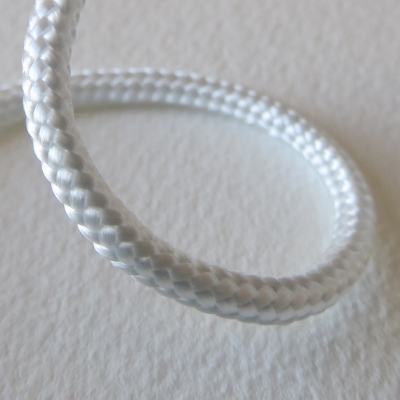
Solid Braid Multi-Filament Polypropylene (MFP): A lightweight, floatable option that is resistant to rot and chemicals—ideal for wet site conditions.
-
Static Kernmantle: Essential for safety and rescue. It features a high-strength core protected by a durable sheath, perfect for rappelling or fixed-line work.
-
Custom Utility Braids: Specifically designed for utility winching and heavy hauling where specific diameters and lengths are required.
What Are the Common Applications of Heavy-Duty Ropes in Construction?
Industrial ropes are the workhorses of the job site. They are primarily used for:
-
Lifting and Hoisting: Moving materials to upper floors safely.
-
Securing Loads: Tying down equipment on trailers or scaffolding.
-
Fall Protection & Safety: Creating secure boundaries or life-safety lines for workers at heights.
How to Maintain and Extend the Life of Heavy-Duty Construction Ropes?
Proper maintenance is a safety requirement, not a suggestion.
-
Storage: Store ropes in a cool, dry, and dark place. UV rays and chemicals are the silent killers of synthetic fibers.
-
Inspection: Before every use, perform a tactile and visual inspection. Look for “fuzzy” spots (abrasion), hard sections (heat damage), or inconsistent diameters (internal core failure).
-
Replacement: Replace any rope immediately if it has been subjected to a sudden shock load or if more than 10% of the outer fibers are worn.
Where Can You Buy Top-Rated Heavy-Duty Ropes for Construction?
For quality you can trust, look for Canadian-made manufacturing. By choosing a local manufacturer like Braid & Lace, you ensure that your ropes meet stringent quality controls and support domestic industry. Custom lengths and specific terminations are available to ensure you aren’t forced into a “one-size-fits-all” solution.