

Marine Rope Types and Best Applications
July 20, 2026
Marine rope types include nylon, polyester, and polyethylene, each suited to specific applications. Nylon resists UV, absorbs shock loads best and is used for anchoring and dock lines. Polyester resists UV, has low stretch and is suited to halyards and control lines in sailing. Polyethylene offers a durable, stretchy and buoyant option for water sports. Most modern marine ropes are made from synthetic fibers.
Marine rope selection determines whether a vessel stays secure or drifts. Synthetic fibers of nylon, polyester, and polyethylene now dominate modern marine applications, replacing natural materials. Each serves a distinct purpose: mooring lines, fender lines, dock lines, and anchor lines all demand different strength, stretch, and construction characteristics. Braids & Laces Limited, proudly manufacturing marine rope in Canada, supplies the full range.
Key Takeaways
- Synthetic fibers like nylon, polyester, and polyethylene replace historic natural rope materials for marine applications.
- Marine ropes secure sails, anchors, and boat cargo through their durable synthetic construction and reliability.
- Braids & Laces Limited, located in Cannington, Ontario, manufactures its full line of marine rope right here in Canada.
- Selecting the incorrect rope for mooring, docking, anchoring, or fendering creates safety hazards and operational failures.
Why Does Marine Rope Choice Matter So Much?
Marine rope choice directly determines whether a vessel stays secured or drifts into danger. A snapped line caused by the wrong rope selection transforms a minor oversight into a serious safety incident one that no boater wants to explain at the dock.
Marine rope types and applications span a wide range of performance demands, and matching the right rope to the right job is non-negotiable.
What Performance Factors Should Boaters Evaluate?
Three core factors separate a reliable marine rope from a liability:
- Strength and durability — the rope must handle the load without failure
- Buoyancy — whether the rope floats or sinks affects safety and handling in different applications
- Stretch characteristics — how much the rope elongates under load or when wet determines its suitability for mooring versus anchoring versus fender use
Getting any one of these factors wrong creates real risk on the water.
What Types of Marine Lines Does Braids & Laces Limited Offer?
Braids & Laces Limited manufactures a comprehensive range of mooring, fender, dock, and anchor lines, all made from high-quality materials at the company’s Canadian facility. Each line category serves a distinct function aboard a vessel. Boaters who need guidance on matching line type to application can contact the Braids & Laces team directly.
- Fender Lines — Braided nylon fender lines are the highest-quality fender lines available, with a braided polyester fender loop option also available for specialized needs.
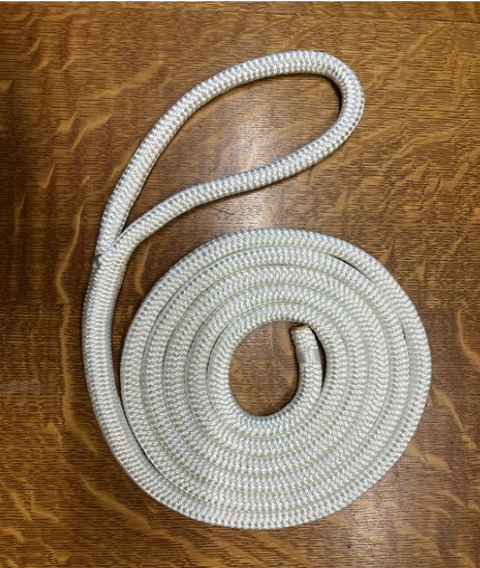
- Dock Lines — Available in both braided nylon and twisted nylon construction. Dock lines feature a professionally spliced loop on one end (stitched for durability), with the other end terminated with a whip and heat seal.
- Anchor Lines — Available in braided or twisted nylon construction, each with a thimble spliced at one end and the other end finished neatly with a whip and heat seal.
- Mooring Lines — Built to secure vessels reliably at dock or mooring, using the same high-quality synthetic construction as the rest of the line.
Which Marine Rope Type Fits Which Application?
Matching rope material to application prevents equipment failure and protects vessels from avoidable damage. Marine rope types and applications differ primarily by stretch, UV resistance, water absorption, and tensile strength and choosing the wrong fiber for a given task costs boaters more than just money.
| Application | Best Fiber | Key Reason |
|---|---|---|
| Anchor lines | Nylon | High elasticity absorbs shock loads, UV resistance |
| Dock lines | Nylon | High elasticity absorbs shock loads, UV resistance |
| Fender lines | Braided nylon | High elasticity absorbs shock loads, UV resistance |
| Fender loops | Polyester | Low stretch, UV resistance, strength |
| Halyards/control ropes | Polyester | Low stretch, UV resistance, high strength |
| Water sports | Polyethylene | Buoyant, no water absorption |
| Competitive racing | UHMWPE | High UV resistance, very low stretch, lightweight, high strength, buoyant |
Polyester rope is most commonly used with sailing and sail boats because it delivers strong tensile performance, Low stretch and high UV resistance.
Nylon ropes behave differently. Its natural elasticity acts as a built-in shock absorber, which is exactly what anchor lines and dock lines need when wave action or wakes to send sudden load spikes through the system.
When Should Boaters Choose Nylon Over Polyester?
Nylon outperforms polyester wherever dynamic loading is a concern. Anchor lines and dock lines benefit from nylon’s ability to stretch and recover, reducing stress on cleats and fittings during rough conditions. That’s why Braids & Laces offers both braided and twisted nylon options for anchor and dock lines, giving boaters flexibility to match construction style to their vessel’s needs.
What Makes Braided Polyester the Right Choice?
Braids & Laces Limited manufactures braided polyester sailing lines as the highest-quality option in the marine lineup. Braided construction resists abrasion against hardware, and polyester’s excellent UV resistance makes it a good choice for sailing.
Dock lines from Braids & Laces feature a professionally spliced loop on one end, combining clean termination with durable construction, while anchor lines are finished with a spliced thimble for secure, long-lasting connection points.
Where Can You Source Reliable Canadian Marine Rope?
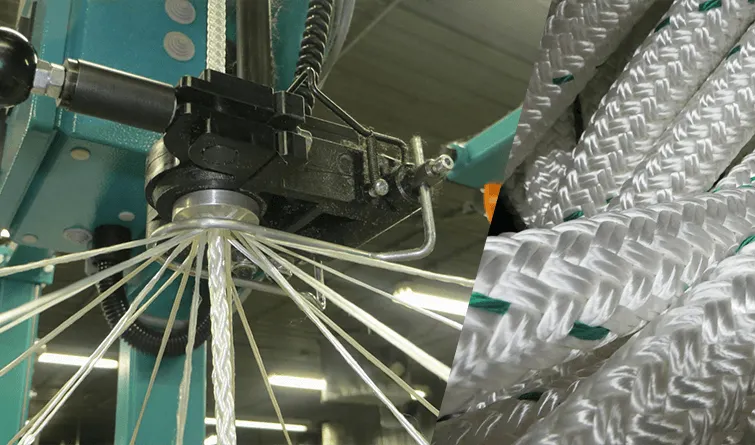
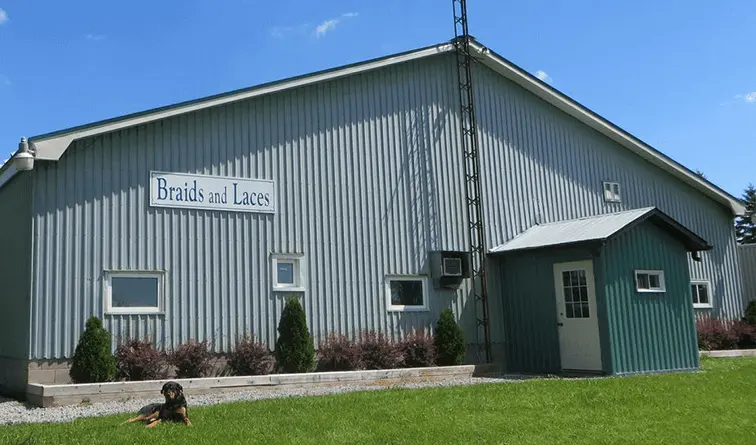
Braids & Laces Limited is a trusted domestic source for high-quality marine rope, made in Canada. A fourth-generation, family-owned manufacturer founded in 1936, Braids & Laces operates from Cannington, Ontario, and builds every line to demanding performance standards all proudly produced on Canadian soil.
Where can boaters buy Braids & Laces marine rope?
Customers who prefer to shop through a dedicated marine retailer can find Braids & Laces products through Hutchings Marine Products, the company’s authorized distributor. That channel gives boaters direct access to mooring, fender, dock, and anchor lines without sourcing directly from the factory floor.
Does Braids & Laces offer custom marine rope solutions?
Standard catalog lines cover most applications. When a project demands something more specific, Braids & Laces connects clients directly with an experienced design team. That team engineers custom rope solutions around precise load ratings, handling characteristics, environmental conditions, and safety requirements, shortening lead times and eliminating guesswork.
Key sourcing options at a glance:
- Distributor purchasing — through Hutchings Marine Products for catalog lines
- Engineered-to-order — direct engagement with the Braids & Laces design team for custom specifications
- Direct inquiries — handled promptly by phone or email for quotes and technical support
Selecting the right marine rope hinges on understanding your vessel’s demands, environmental exposure, and safety requirements. Whether you’re securing cargo, managing anchoring systems, or docking for the season, the rope construction, fiber composition, and strength characteristics determine its performance in marine conditions. Braids & Laces manufactures marine lines engineered to withstand the demands of on-the-water use, delivering the durability and reliability that boaters depend on built right here in Canada. Investing in quality rope built to specification protects both your crew and your vessel.
FAQ
Which rope material works best for dock lines and anchor lines?
Nylon absorbs shock loads better than other synthetic fibers, making it the top choice for anchor lines where elasticity protects the vessel from sudden stress. Braids & Laces offers both braided and twisted nylon dock lines and anchor lines, each finished with a spliced thimble.
What fender line options does Braids & Laces offer?
Braided nylon fender lines are the highest-quality option, with a braided polyester fender loop also available for specialized fender setups.
Where is Braids & Laces marine rope made?
All Braids & Laces marine rope is manufactured in Canada at the company’s facility in Cannington, Ontario a fourth-generation, family-owned operation since 1936.